Imagine waking up on a cold Ontario morning, turning up the thermostat, and realizing your furnace is blowing cold air instead of keeping your home warm. It is frustrating, especially when winter temperatures start dropping. The good news is that some heating problems have simple explanations, while others need professional attention. This guide explains nine common causes, safe checks homeowners can make, and when to arrange furnace repair in Ajax, ON.
Why Is Your Furnace Blowing Cold Air?
A furnace can blow cool air for several reasons. Sometimes the thermostat settings are incorrect. In other situations, a dirty filter, restricted airflow, or a faulty component may stop the heating cycle from working properly.
Understanding the cause is important because repeatedly restarting a malfunctioning furnace will not necessarily solve the problem. It may also make an existing issue worse.
For homeowners looking into furnace repair in Ajax, ON, recognizing the warning signs can help them describe the problem clearly and get the right type of service.
Here are nine common reasons your heating system may not be producing warm air.
- Thermostat fan set to ON: The blower may continue circulating room-temperature air between heating cycles.
- Incorrect thermostat mode: The thermostat may be set to cooling instead of heating.
- Dead thermostat batteries: Some battery-powered thermostats stop communicating properly when their batteries are low.
- Dirty air filter: A clogged filter can restrict airflow and cause the furnace to overheat.
- Blocked vents: Furniture, rugs, and household items may restrict the movement of warm air.
- Normal startup cycle: Some systems briefly circulate air while starting or completing a heating cycle.
- Overheating or safety shutdown: The furnace may stop producing heat while its blower continues running.
- Ignition or flame sensor problem: A gas furnace may fail to maintain a proper burner flame.
- Ductwork or heat pump issues: Leaking ducts or a heat pump operating in its defrost cycle may affect the temperature coming from your vents.
These problems require different solutions. A few basic checks are reasonable for homeowners, but internal furnace repairs should be left to qualified professionals.
What Homeowners Can Check Safely at Home
Before arranging a service visit, there are a few simple things you can inspect without opening the furnace or working on electrical or gas components.
Check the Thermostat Mode and Fan Setting
Start with the thermostat. Confirm that the system is set to Heat rather than Cool. Next, look at the fan setting. If it is set to On, the blower may circulate air even when the furnace is not actively heating. Switching it to Auto may solve this particular issue.
Check the temperature setting and programmed schedule as well. Some thermostats lower the temperature automatically at certain times. If your thermostat uses batteries, replace them according to its instructions when a low-battery warning appears.
These simple checks may help identify a setting issue before you arrange furnace repair in Ajax, ON.
Inspect the Air Filter and Visible Vents
A dirty furnace filter can restrict airflow and affect the heating system’s performance. Check the filter according to the manufacturer’s instructions. Replace it when needed using the correct size and type.
Next, walk through your home and make sure furniture, curtains, and rugs are not blocking supply vents or return air grilles. Good airflow helps the heating system distribute warm air throughout the property.
Do not remove furnace panels, clean internal components, or attempt to repair wiring. Those tasks require appropriate knowledge and training.
Notice When the Cold Air Appears
Pay attention to when the problem starts. Does the furnace blow cool air immediately after being switched on? Does it become warm and then turn cold? Does the system repeatedly stop and restart?
Also notice whether only one room feels cold or whether the entire property has the same problem. These details can help a technician understand whether the issue may involve the thermostat, airflow, heating equipment, or ductwork.
Write down any unusual noises or changes in performance. A clear description makes it easier to explain what is happening when arranging professional service.
When Should You Call a Heating Professional?
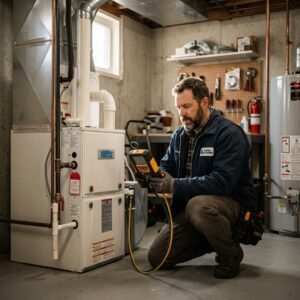
Some heating problems cannot be solved through basic thermostat adjustments or filter replacement. A professional inspection may be necessary when the furnace keeps shutting down, fails to produce heat, or shows signs of mechanical damage.
Repeated Shutdowns and Short Cycling
Does your furnace turn on for a short period, stop, and then start again? This pattern is commonly called short cycling.
It can happen because of restricted airflow, overheating, thermostat problems, or faults with internal components. Repeated shutdowns should not be ignored because they may place additional stress on the heating equipment.
A qualified technician can inspect the system, identify the reason for the shutdowns, and explain the appropriate repair.
Unusual Noises, Burning Smells, or Visible Damage
A heating system may produce some normal operating sounds, but sudden banging, scraping, repeated clicking, or unusual vibrations deserve attention.
A persistent burning smell, visible soot, damaged wiring, or signs of overheating should also be taken seriously. Stop using the equipment if you suspect an unsafe fault and arrange an appropriate inspection.
Never attempt to dismantle the furnace or investigate its gas connections yourself.
A Carbon Monoxide Alarm or Suspected Gas Leak
Carbon monoxide is an invisible, odourless gas that can be produced when fuel-burning appliances do not operate or vent properly.
If your carbon monoxide alarm sounds, leave the building immediately with everyone inside and call 911 or local emergency services from outside. Do not return until emergency responders say it is safe.
If you suspect a natural gas leak, leave the property and contact the appropriate emergency gas service from a safe location. Do not operate electrical switches or create a flame inside.
Ontario’s Updated Carbon Monoxide Alarm Rules
Heating safety is especially important during the colder months because homeowners use furnaces, fireplaces, and other fuel-burning appliances more frequently.
Ontario’s updated Fire Code requirements took effect on January 1, 2026. Existing homes with a fuel-burning appliance, fireplace, or attached garage generally require carbon monoxide alarms near sleeping areas and on every storey, including levels without bedrooms.
Homeowners should check the official Ontario carbon monoxide safety requirements for the rules that apply to their property.
Test your alarms regularly and follow the manufacturer’s instructions for installation, battery replacement, and maintenance. Never assume that a furnace is safe simply because it is producing warm air.
A working alarm and properly maintained heating equipment are important parts of protecting your household throughout winter.
Choose the Right Contractor for Fuel-Burning Furnace Work
When arranging heating equipment repairs, choosing the right professional matters just as much as finding the cause of the problem.
Ontario has specific requirements for work involving natural gas and other fuel-burning appliances. TSSA states that only registered fuels contractors and appropriately certified technicians are legally authorized to perform regulated fuels work.
Before hiring someone for gas furnace repair or installation, ask for the contractor’s TSSA registration details and verify them through the official TSSA contractor directory.
You should also request a clear explanation of the problem, a written estimate, and details of the proposed work. Ask whether replacement parts and labour are included in the quoted price.
A good service experience should leave you understanding what went wrong, what was repaired, and whether further maintenance is recommended.
Is Your System a Furnace or a Heat Pump?
Not every home in Ontario uses the same heating equipment. Some properties rely on traditional furnaces, while others use heat pumps or combined heating systems.
This difference matters when warm air seems cooler than expected.
A heat pump may occasionally operate in a defrost cycle during cold weather. During this process, the system temporarily changes how it operates to remove frost from the outdoor coil. Some systems use supplemental heat to maintain indoor comfort during this period.
That behaviour is different from a gas furnace that fails to produce heat. Before assuming your equipment is broken, check your system’s operating information and manufacturer instructions.
If the heat remains inadequate, the equipment frequently cycles, or unusual sounds appear, professional troubleshooting can help determine what is happening.
Repair or Replace: What Should You Consider?
When a furnace develops a problem, homeowners often wonder whether repairing it is worthwhile or whether replacement makes more sense.
The answer depends on several factors, including the equipment’s age, condition, repair history, energy use, and the cost of the proposed repair.
An isolated problem involving a replaceable component may be worth repairing. However, recurring breakdowns, poor heating performance, and several expensive repairs may indicate that the system needs a more detailed assessment.
Ask the technician to explain both options rather than agreeing immediately to a new installation.
A replacement should also be properly sized for your property. Factors such as the home’s layout, insulation, windows, and heating requirements affect equipment selection.
For more guidance about heating equipment and installation decisions, visit our related article, Why Homeowners Trust Our HVAC Services in Ajax, ON.
How Ajax Weather Can Affect Heating Performance
Homeowners in Ajax experience changing seasonal conditions, from cool autumn evenings to freezing winter temperatures. As the weather gets colder, heating equipment usually runs more often to maintain indoor comfort.
This is when existing problems may become easier to notice. A furnace that seemed reliable during mild autumn weather may struggle when it needs to heat the home for longer periods.
Outdoor snow and ice can also affect exposed intake and exhaust openings on certain systems. Homeowners should check accessible external vents after snowfall and make sure they are not covered or blocked. Never climb onto a roof or remove ice from an unsafe area.
The Technical Standards and Safety Authority has also warned homeowners about keeping fuel-burning appliance vents clear of snow and ice because blocked exhaust openings can create carbon monoxide risks.
Staying aware of local weather alerts and maintaining the heating system before severe cold arrives can help reduce unexpected disruptions.
How Soogrim Can Help with HVAC Questions
Finding a suitable home service provider is important when your heating system is not performing as expected.
Soogrim Home Solutions INC. has over 30 years of hands-on experience in home repair and maintenance. Its listed services include HVAC repair, heating and cooling solutions, furnace-related work, and other household repairs.
Homeowners can explore the company’s HVAC services and repair information to learn more about available services.
When comparing providers for furnace repair in Ajax, ON, consider experience, clear communication, written estimates, and the appropriate qualifications for the specific work.
Always verify TSSA authorization for any regulated gas furnace work before booking.
Frequently Asked Questions
Why is my furnace blowing cold air when the heat is on?
Possible reasons include incorrect thermostat settings, a dirty filter, blocked airflow, overheating, or a problem with the ignition system. Start with safe thermostat and filter checks. Contact a qualified professional if the problem continues.
Can a dirty furnace filter cause cold air?
Yes. A clogged filter can restrict airflow and cause some furnaces to overheat. A safety control may then stop the burners while the blower continues running.
Is it normal for a furnace to blow cold air when it starts?
Some systems may briefly circulate cooler air during startup or between heating cycles. However, continuous cold airflow or a home that does not reach the selected temperature should be investigated.
When should I arrange furnace service?
Arrange an inspection when your furnace repeatedly shuts down, makes unusual noises, produces inadequate heat, or shows signs of a fault. Do not wait for a complete breakdown during freezing weather.
Can I repair my gas furnace myself?
Homeowners can check thermostat settings, replace suitable user-accessible filters, and keep vents clear. Gas connections, burners, ignition components, and other regulated work must be handled by appropriately qualified and authorized professionals.
A Simple Action Plan Before the Next Cold Snap
Before temperatures drop further, check your thermostat, replace a dirty filter when required, and keep visible vents clear. Make sure carbon monoxide alarms are installed and working according to Ontario’s current requirements.
If your furnace continues blowing cold air or repeatedly shuts down, arrange a professional assessment instead of repeatedly restarting the equipment. Early attention can help you understand the problem and make a sensible repair decision.
Final Thoughts
A warm and comfortable home starts with a heating system that works properly. Small thermostat or airflow issues may have simple explanations, but repeated shutdowns and persistent cold air should never be ignored. Homeowners who understand the warning signs can make better decisions and prepare before the coldest days arrive. For furnace repair in Ajax, ON, contact Soogrim Home Solutions INC. at 416-668-7298 to discuss your home’s heating and repair needs.