Two showers back to back, then the dishwasher starts. By the time someone else turns on the hot tap, the water has gone lukewarm. That is one reason homeowners consider tankless water heaters. Others start comparing options because their existing tank is getting old, showing signs of rust, or costing more to repair.
If you are weighing a tank vs. tankless water heater in Ajax, ON, the best choice depends on more than the equipment price. Your household’s hot-water demand, the space available, your home’s existing gas or electrical setup, and your budget all matter.
This guide compares how both systems work, what they may cost, how much maintenance they need, and when replacing a traditional tank may make more sense than switching to tankless. You can also learn more about Soogrim Home Solutions on Google and see what local customers say about our services.
Tank vs. Tankless Water Heaters: What’s the Difference?
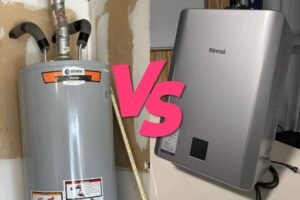
The main difference is how each system heats and supplies hot water. A traditional tank heats a stored supply of water and keeps it ready for use. A tankless unit heats water as it moves through the system when a hot tap or appliance calls for it.
How a Tankless Water Heater Works
When you turn on a hot tap, cold water enters the tankless unit and passes through a heat exchanger warmed by a gas burner or electric element. The water leaves the unit hot, without being stored in a tank.
That means you do not have a full tank losing heat while it waits to be used. It does not mean the unit can supply unlimited hot water, though. Every model has a maximum flow rate at a specific temperature rise. In winter, incoming water is colder, so the unit has to work harder to reach the set temperature. Its available flow may be lower than it is in summer.
For example, a unit sized for one shower may struggle if two showers and a dishwasher run at the same time. Correct sizing is essential.
How a Traditional Tank Water Heater Works
A tank water heater stores a set amount of hot water and reheats it as needed. You have a reserve ready when someone turns on a tap or starts an appliance. Once that reserve is used, the heater needs time to warm more water.
A tank usually costs less upfront than a tankless system. When replacing an existing tank with a similar model, the installer may also be able to reuse much of the current setup. The trade-off is that the tank takes up floor space and can lose some heat while storing hot water.
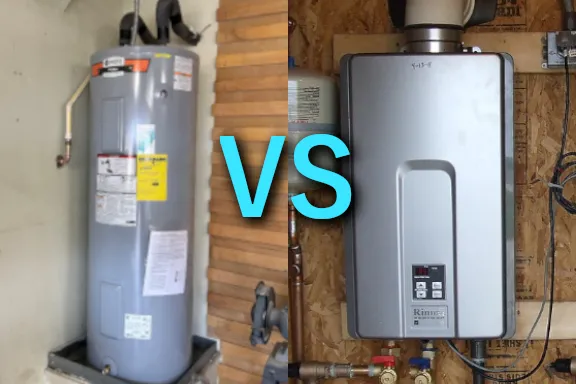
Tank vs. Tankless: Quick Comparison
| Factor | Traditional tank | Tankless |
| Upfront cost | Usually lower | Usually higher |
| Hot-water supply | Stores a fixed amount, then reheats | Heats on demand, within its rated flow capacity |
| Space | Takes up floor space | Compact and usually wall-mounted |
| Installation | Often simpler for a like-for-like replacement | May need gas-line, venting, drainage, or electrical changes |
| Energy use | Can lose heat while storing hot water | Avoids most standby heat loss; certified models may use less energy |
| Maintenance | Follow the manufacturer’s inspection and maintenance guidance | Descaling may be needed, depending on water quality and manufacturer guidance |
| Typical lifespan | Roughly 8 to 12 years | Often around 15 to 20 years, depending on the model and care |
These lifespan figures are general estimates, not guarantees. The model, water quality, usage, installation quality, and maintenance all affect how long a heater lasts.
Pros and Cons of Tankless Water Heaters
A tankless system can be a good fit, but it is not automatically the better option for every household.
Potential Benefits
- More usable space: A wall-mounted unit takes up less room than a storage tank.
- Hot water on demand: It heats water when a tap or appliance needs it, rather than keeping a full tank hot.
- Less standby heat loss: ENERGY STAR-certified tankless models use about 30% less energy on average than storage tank models, according to Natural Resources Canada. Actual savings depend on the model, fuel costs, and household usage.
- Longer expected service life: ENERGY STAR gives whole-home gas tankless water heaters a life expectancy of about 20 years. The actual lifespan depends on maintenance and conditions in the home.
Potential Drawbacks
- Higher upfront cost: The equipment and installation can cost more than a straightforward tank replacement.
- Possible upgrades: The home may need a larger gas line, different venting, a condensate drain, or electrical work.
- Flow-rate limits: Too many fixtures running at once can exceed the unit’s capacity.
- A wait at distant taps: The hot water still has to travel through the pipes. A tankless system does not remove that delay. A recirculation system may help, but it adds cost and complexity.
- Mineral scale: Hard water can leave deposits inside the heat exchanger. The unit may need periodic descaling.
- Sizing is important: A unit that is too small may not keep up with the household’s demand, especially when incoming water is cold.
How Much Does a Tank or Tankless Water Heater Cost in Ontario?
The installed price depends on the type of heater and how much work the home needs. A standard tank replacement is usually less expensive than converting from a tank to a tankless system, particularly when the conversion requires gas-line, venting, or electrical upgrades.
The following are broad Canadian estimates from HomeStars’ 2026 price guides. They are national reference ranges, not Ajax-specific quotes. Actual prices can vary by home, equipment, contractor, and installation requirements.
| Installation scenario | Typical installed cost (CAD) |
| Standard hot water tank replacement | $1,200 to $2,800+ |
| Gas tankless replacing a gas tank, with compatible venting | $2,800 to $4,500 |
| Gas tankless condensing model with new PVC venting | $4,000 to $6,500 |
| Gas tankless installation requiring a gas-line upgrade | $5,000 to $10,000 |
| Electric tankless, with no panel upgrade | $800 to $2,500 |
| Electric tankless, with a panel upgrade | $2,500 to $4,500 |
Some Canadian estimates put permits at roughly $100 to $500, depending on the work and location. Ask the contractor which permits or inspections apply to your project and whether those costs are included in the quote.
What Can Change the Installation Price?
The equipment is only one part of the total. The home’s existing connections and layout can make a bigger difference.
- Gas-line capacity: A line that works for a traditional tank may not supply enough gas for a tankless model.
- Venting: A new unit may require a different vent material or route. Existing venting should not be assumed compatible.
- Condensate drainage: Some high-efficiency condensing models need a suitable drain or condensate pump.
- Electrical capacity: Electric tankless heaters can draw substantial current and may require a dedicated circuit or panel upgrade.
- Removal and disposal: Ask whether the quote includes disconnecting and removing the old heater.
- Permits and testing: Confirm who arranges any required permits, inspections, and final checks.
Ask for two itemised quotes when possible: one for replacing the current tank with another tank, and one for converting to tankless. Compare the equipment, labour, upgrades, permits, and removal costs rather than choosing based on the headline price alone.
Is a Tankless Water Heater Worth It for Ajax Homeowners?
The answer comes down to three practical questions: how much hot water your household uses at once, what your home can support, and how long you expect to stay there.
When Tankless May Be a Good Fit
Imagine a family that regularly runs out of hot water during the morning rush. A correctly sized tankless unit may help, provided the gas supply or electrical system can support it. It may also appeal to homeowners who want to free up floor space and expect to stay in the property long enough to make use of the system’s longer service life.
The unit should be sized for winter conditions, not just summer use. Incoming water is colder in winter, which increases the temperature rise the heater must provide and can reduce its available flow rate.
When a Traditional Tank May Be the Better Choice
A new tank may be the more practical option for a smaller household with modest hot-water use, especially when the current connections can be reused. It can also be the better value when a tankless conversion would require major gas-line, venting, or electrical work.
If the main problem is an ageing tank, you do not have to switch technologies just because you are replacing it. A like-for-like replacement may solve the problem with less disruption and a lower initial cost.
Questions to Ask Before Choosing
- How many showers and appliances are likely to run at the same time?
- What is the total installed price of each option?
- Can the existing gas line, venting, or electrical panel support the new unit?
- How much maintenance does the model require?
- How long do you expect to stay in the home?
- Does the exact model qualify for an incentive, and have the current program rules been checked?
What Should You Check Before Installing a Tankless Water Heater?
A tankless conversion is not always a direct replacement. Before choosing a model, have a qualified professional assess the existing setup and confirm what changes may be needed.
For more information about the installation process, sizing requirements, and preparation, read our guide to tankless water heater installation in Ajax.
For a gas model, the assessment should consider the gas meter and line capacity, the vent route, combustion-air requirements, clearances, and condensate drainage if the model requires it. For an electric model, the available electrical capacity and any dedicated circuit or panel work should be checked.
In Ontario, gas appliance work must be performed by a TSSA-registered fuels contractor using a technician with the appropriate gas technician certification. Soogrim Home Solutions INC. performs TSSA-regulated gas installations in accordance with Ontario requirements. Before work begins, homeowners can ask for the contractor’s TSSA registration details and the technician’s name and certificate information. They can also confirm the contractor’s registration through TSSA and ask who is responsible for any permits, inspections, and final testing required for the job.
Are Tankless Water Heater Rebates Available in Ontario?
Do not assume that every high-efficiency water heater qualifies for the same rebate. Gas tankless water heaters and heat pump water heaters are different technologies, and incentive programs set separate eligibility rules.
As of November 6, 2026, Ontario’s Home Renovation Savings Program lists a $500 rebate for qualifying ENERGY STAR-certified heat pump water heaters. That incentive is for eligible heat pump models; it does not mean a standard gas tankless water heater qualifies.
Before buying, check the current program terms, confirm that the exact model and fuel type are eligible, and find out whether pre-approval, an energy assessment, or a participating contractor is required. Program amounts and requirements can change.
How Long Do Tank and Tankless Water Heaters Last?
A traditional storage tank commonly lasts around 8 to 12 years, while tankless models are often estimated at 15 to 20 years. ENERGY STAR gives a life expectancy of about 20 years for whole-home gas tankless water heaters. These are planning estimates, not promises or warranty periods.
Water quality, household demand, installation quality, and regular maintenance all affect lifespan. For tankless systems, mineral scale can build up inside the heat exchanger and reduce performance. Natural Resources Canada recommends having a water heater serviced once every year or two and advises homeowners to follow the owner’s manual for model-specific care.
Keep an eye out for warning signs such as lower hot-water flow, inconsistent temperatures, unusual noises, error codes, visible corrosion, or water around the unit. Do not ignore a leak or a recurring performance problem.
Water Heater Maintenance: What Should Homeowners Know?
Both types of water heaters need care. Follow the manufacturer’s instructions for inspection and maintenance rather than relying on one schedule for every model.
For more ways to prepare your home’s plumbing for colder weather, read our pre-winter plumbing checklist for Ajax homeowners.
For a tankless unit, maintenance may include checking the inlet filter, keeping the vent and surrounding area clear, checking the condensate drain on applicable models, and descaling the heat exchanger when recommended. Harder water and heavier use may mean more frequent descaling.
For a traditional tank, ask the installer or service professional what inspection and maintenance the model requires, including any guidance about sediment and corrosion protection. If you are unsure how to carry out a maintenance task safely, arrange service with a qualified professional.
Should You Repair or Replace Your Existing Water Heater?
Replacing an old heater is not always the first step. The right decision depends on the fault, the unit’s age, the cost of repair, and whether the rest of the system is in good condition.
When Repair May Make Sense
Repair may be worth considering when the heater is relatively new and the issue is isolated, such as an ignition problem, a thermostat fault, or a leaking connection or valve. A technician should identify the cause before you decide. The cost of the repair, the availability of parts, and the unit’s age all matter.
For other household issues, including plumbing leaks and faulty connections, explore our home repair services.
When Replacement May Be the Better Option
Replacement is more likely to make sense when:
- The storage tank itself is leaking or has significant corrosion.
- The unit is near or beyond its expected lifespan.
- Breakdowns are becoming frequent.
- Repair costs are adding up or parts are difficult to find.
- Your household’s hot-water needs have changed.
Ask for the repair cost and replacement cost side by side. If replacement is needed, compare a new tank with a tankless conversion before making the decision.
Frequently Asked Questions About Tank and Tankless Water Heaters
How much does a tankless water heater cost in Ontario?
A 2026 Canadian price guide lists gas tankless installations from about $2,800 for a straightforward replacement with compatible venting to as much as $10,000 when a gas-line upgrade is required. Electric installations may cost less when the electrical panel can support the unit. These are national estimates, not a quote for a specific Ajax home.
Is a tankless water heater better than a traditional tank?
Not in every home. Tankless systems save space and avoid most standby heat loss, but they usually cost more upfront and have flow-rate limits. A traditional tank may be the better value when hot-water demand is modest or a tankless conversion requires major upgrades.
Can a tankless water heater run two showers and a dishwasher at once?
It can only do so if the model is sized for the combined flow and the required temperature rise. Cold winter incoming water can reduce the available flow. Ask for sizing based on the fixtures your household may use at the same time.
How long does a tankless water heater last?
Many tankless models are expected to last around 15 to 20 years with appropriate care. ENERGY STAR gives whole-home gas tankless water heaters a life expectancy of about 20 years. Water quality, usage, installation, and maintenance affect the actual lifespan.
How often should a tankless water heater be flushed?
There is no single schedule that applies to every model. Follow the manufacturer’s instructions and consider your water hardness and usage. Natural Resources Canada recommends professional water-heater servicing once every year or two; the owner’s manual should guide model-specific descaling.
Are there rebates for gas tankless water heaters in Ontario?
The Home Renovation Savings Program currently lists a $500 incentive for qualifying ENERGY STAR-certified heat pump water heaters. A heat pump water heater is different from a standard gas tankless model, so do not assume the gas unit qualifies. Check the current program rules before buying.
Can I replace my tank with a gas tankless water heater?
Often, yes, but the existing gas supply, venting, clearances, drainage, and electrical connections must be checked first. Some homes need upgrades, which can increase the total cost. Ontario gas appliance work must be completed by a TSSA-registered fuels contractor using an appropriately certified gas technician.
Need Help Deciding What to Do About Your Water Heater in Ajax?
Before choosing, compare your household’s hot-water needs with the full installed price of each option. Ask for separate, itemised estimates for a traditional tank replacement and a tankless conversion so you can see what the difference really is.
Need help deciding what to do about a water heater issue in Ajax? Contact Soogrim Home Solutions INC to discuss the problem and ask about the right next step for your home. Soogrim Home Solutions INC. performs TSSA-regulated gas water-heater installations in accordance with Ontario requirements, with appropriately certified personnel carrying out regulated work.